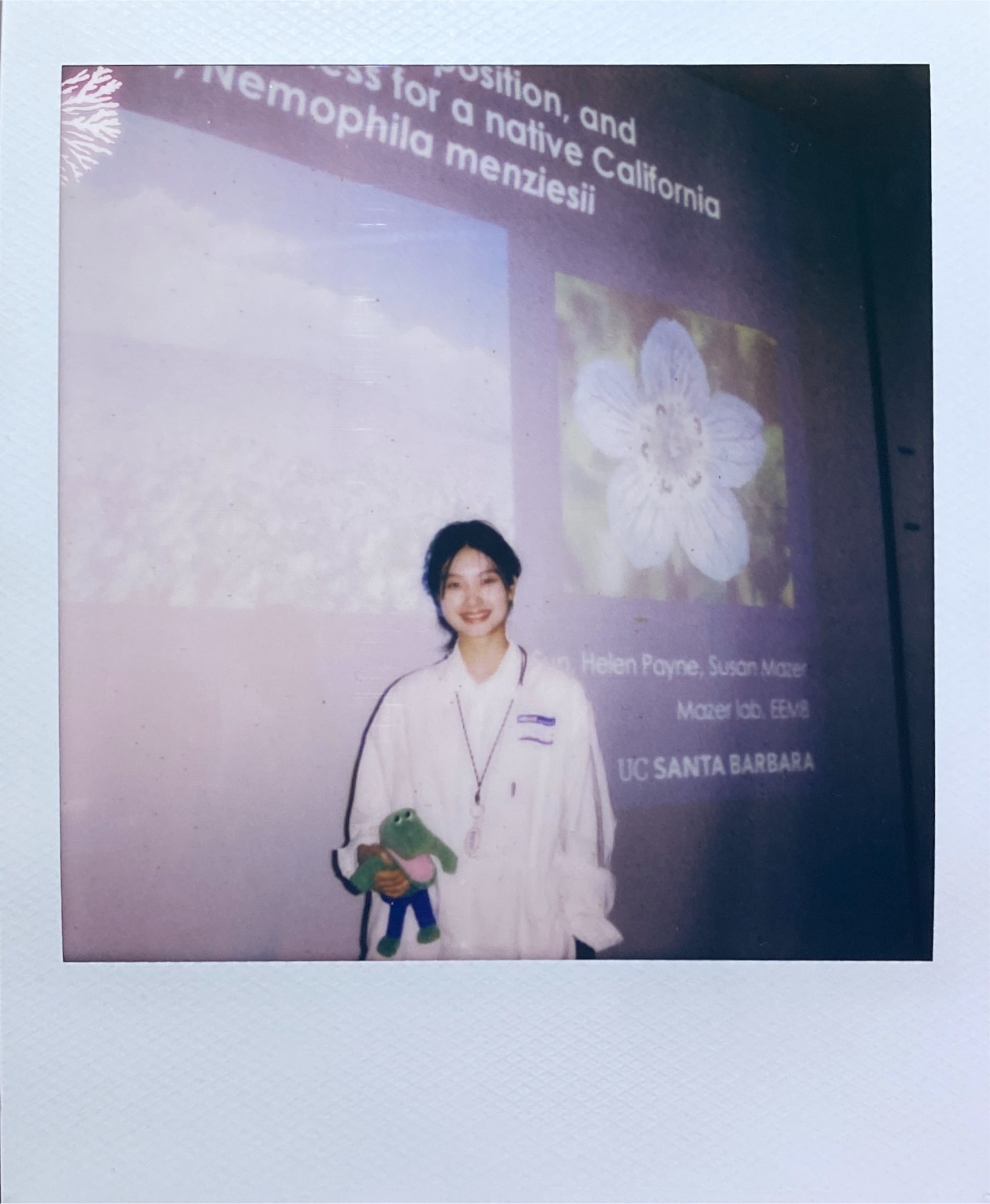
Style Length, Pollination, and Fitness in Nemophila menziesii
A field-based ecology and evolution research project exploring plant reproductive traits, presented at the UCSB EEMB Undergraduate Research Symposium.
Research Overview
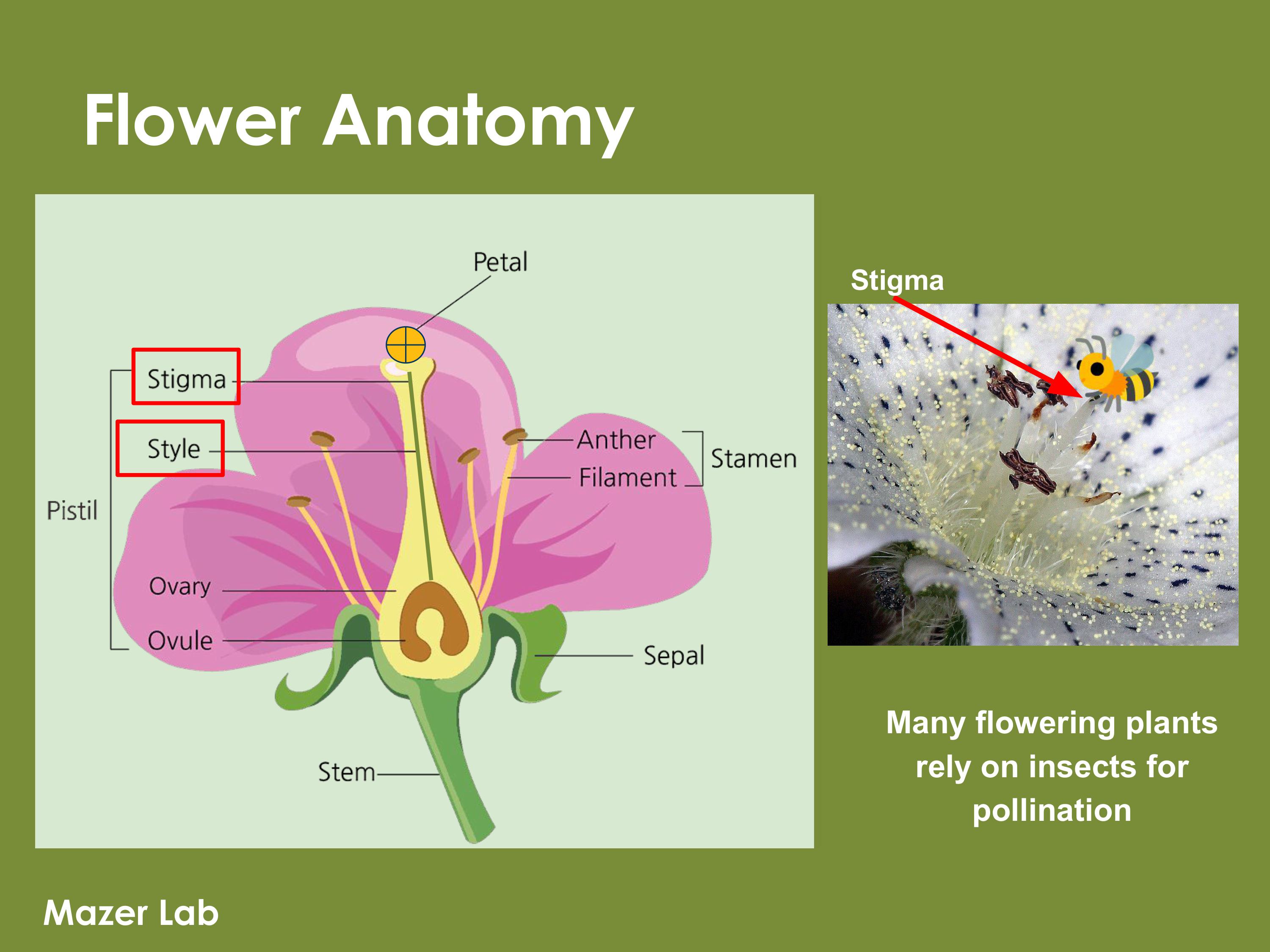
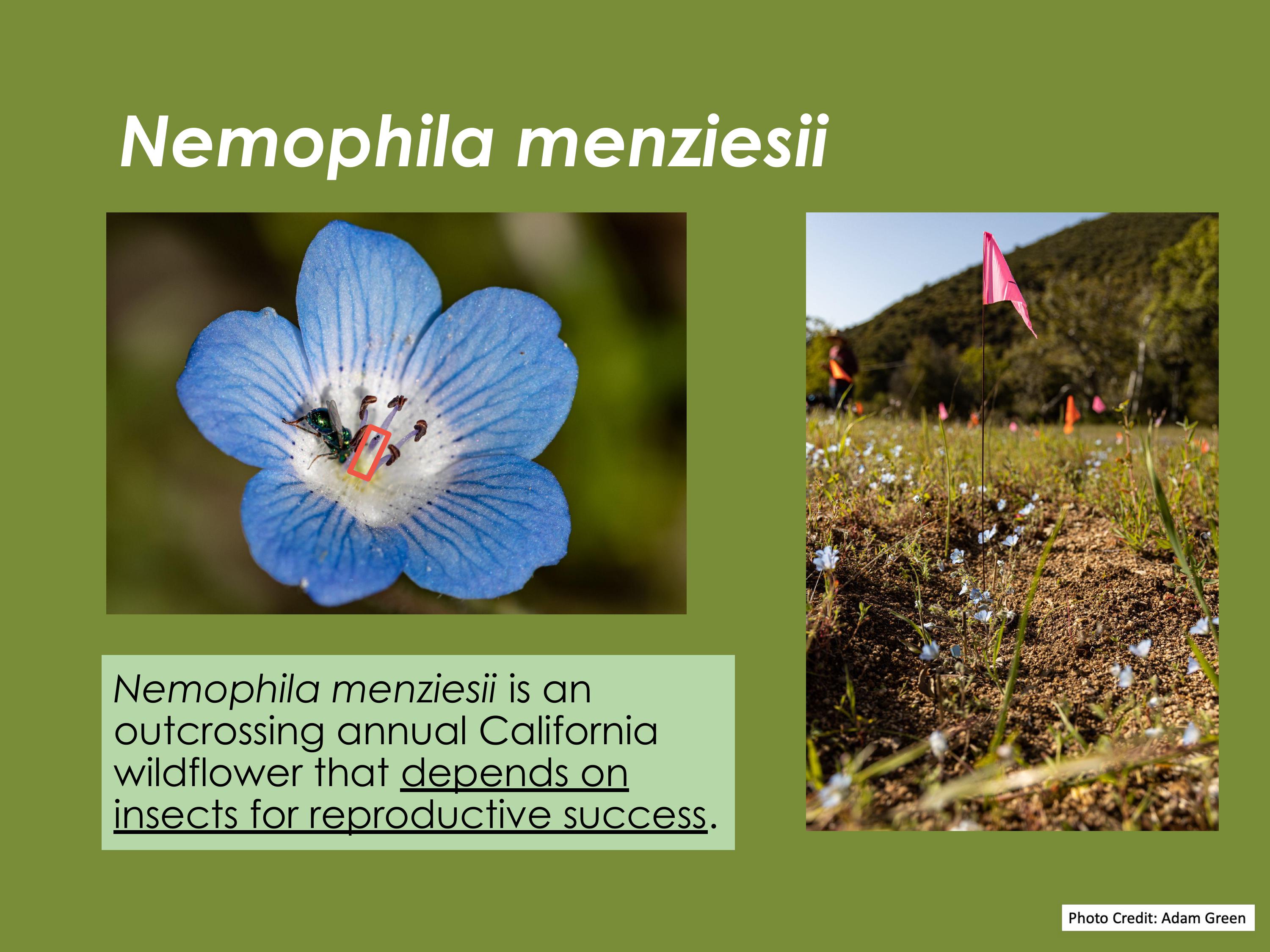
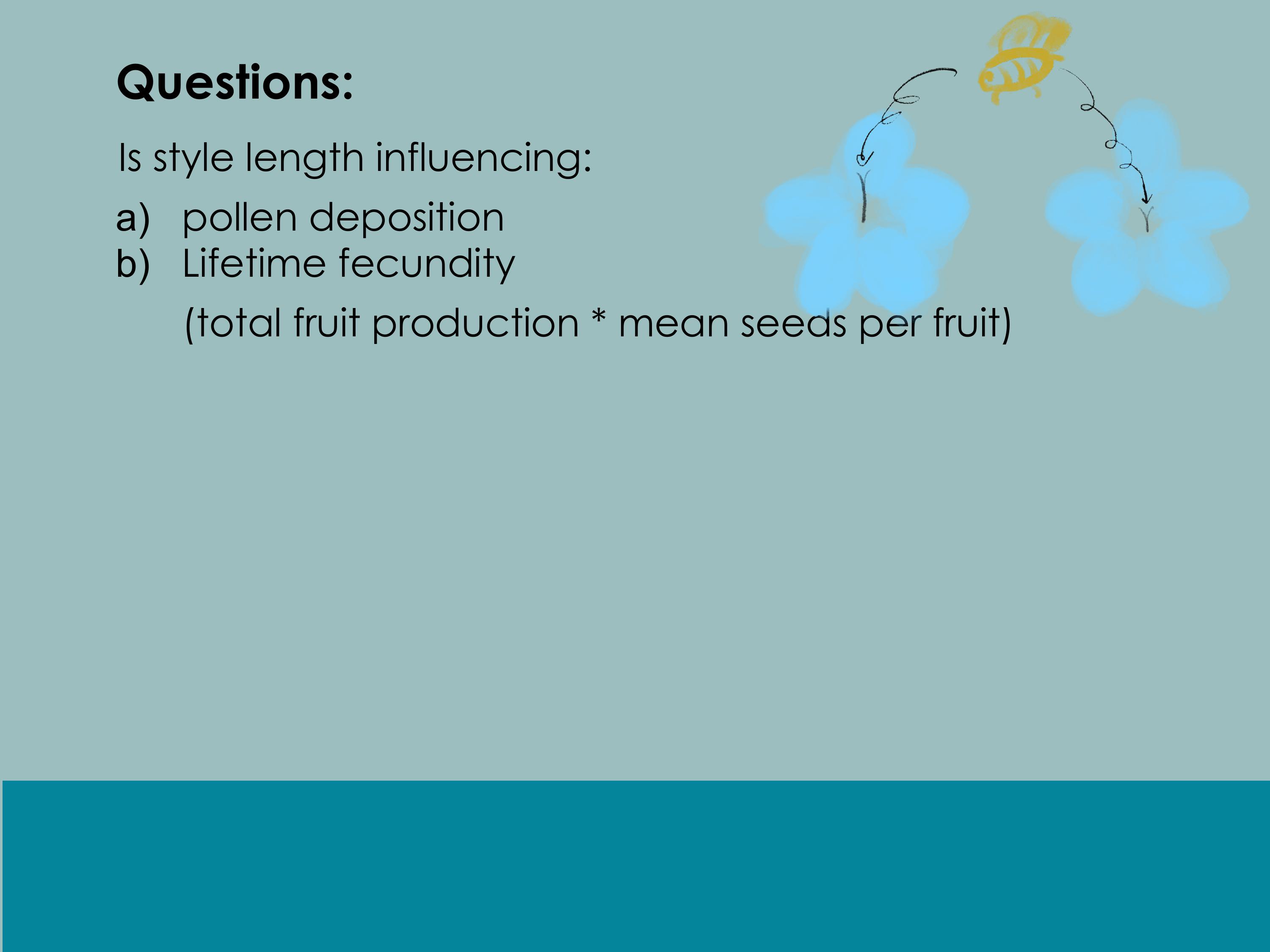
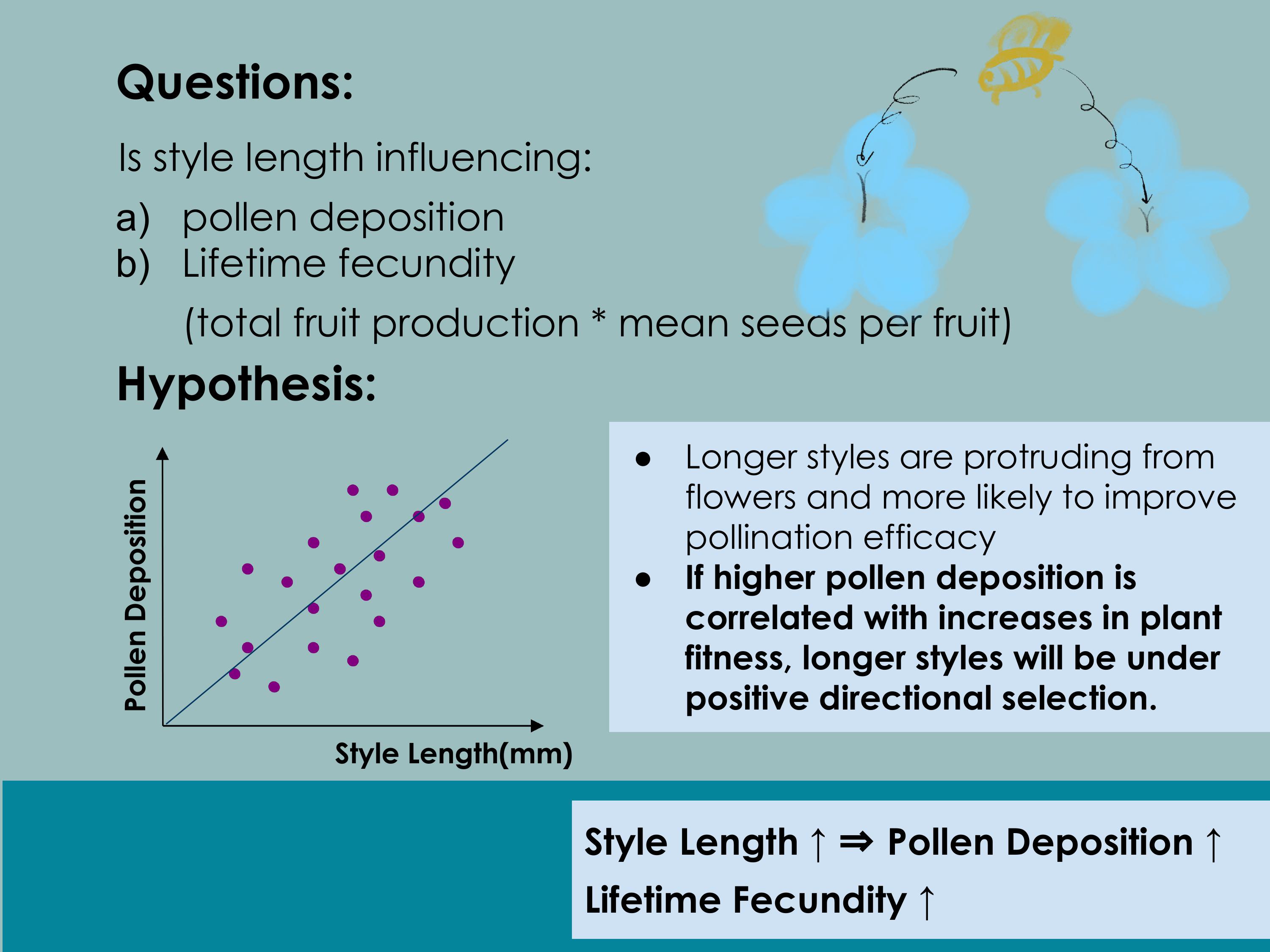
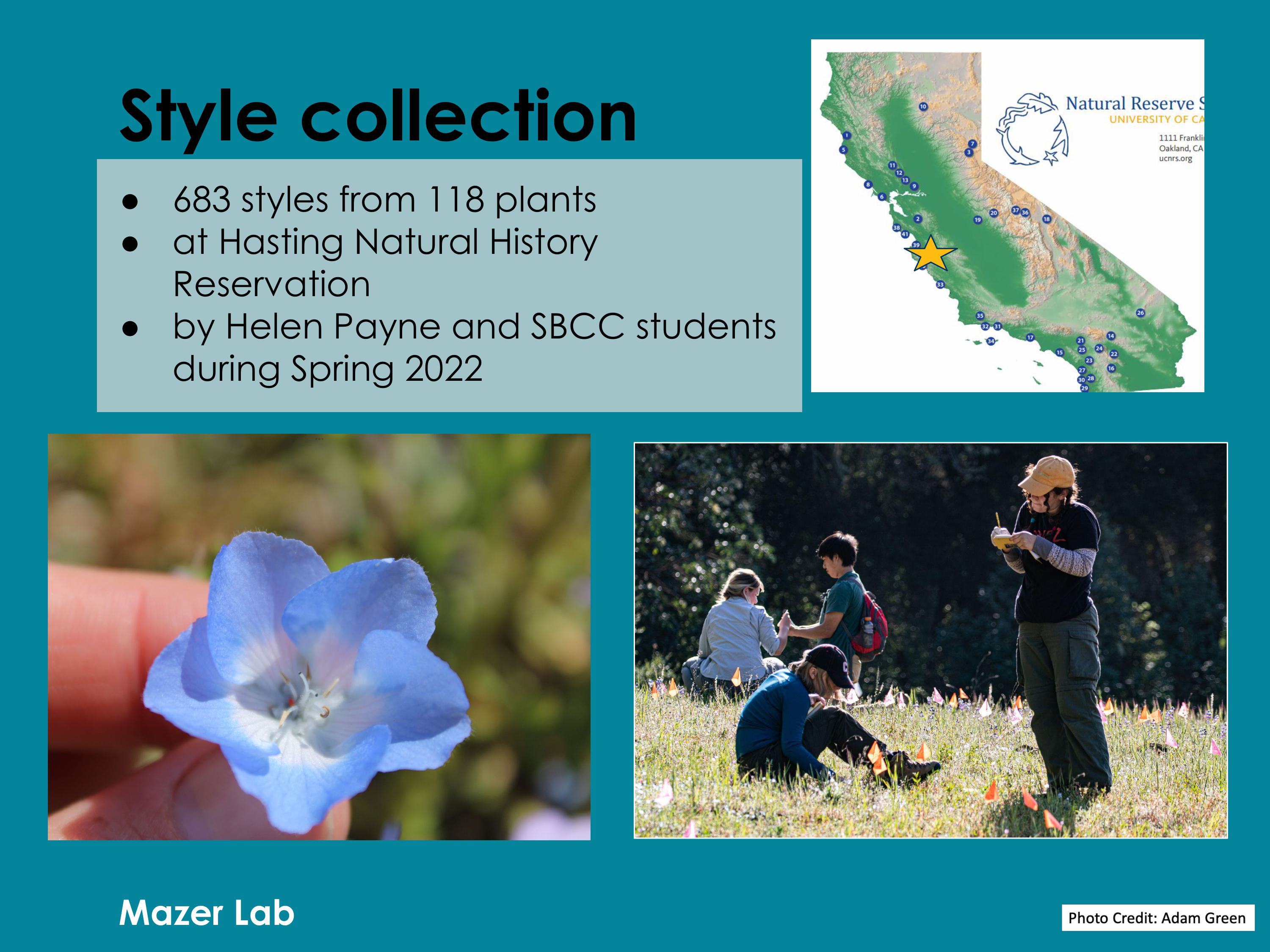
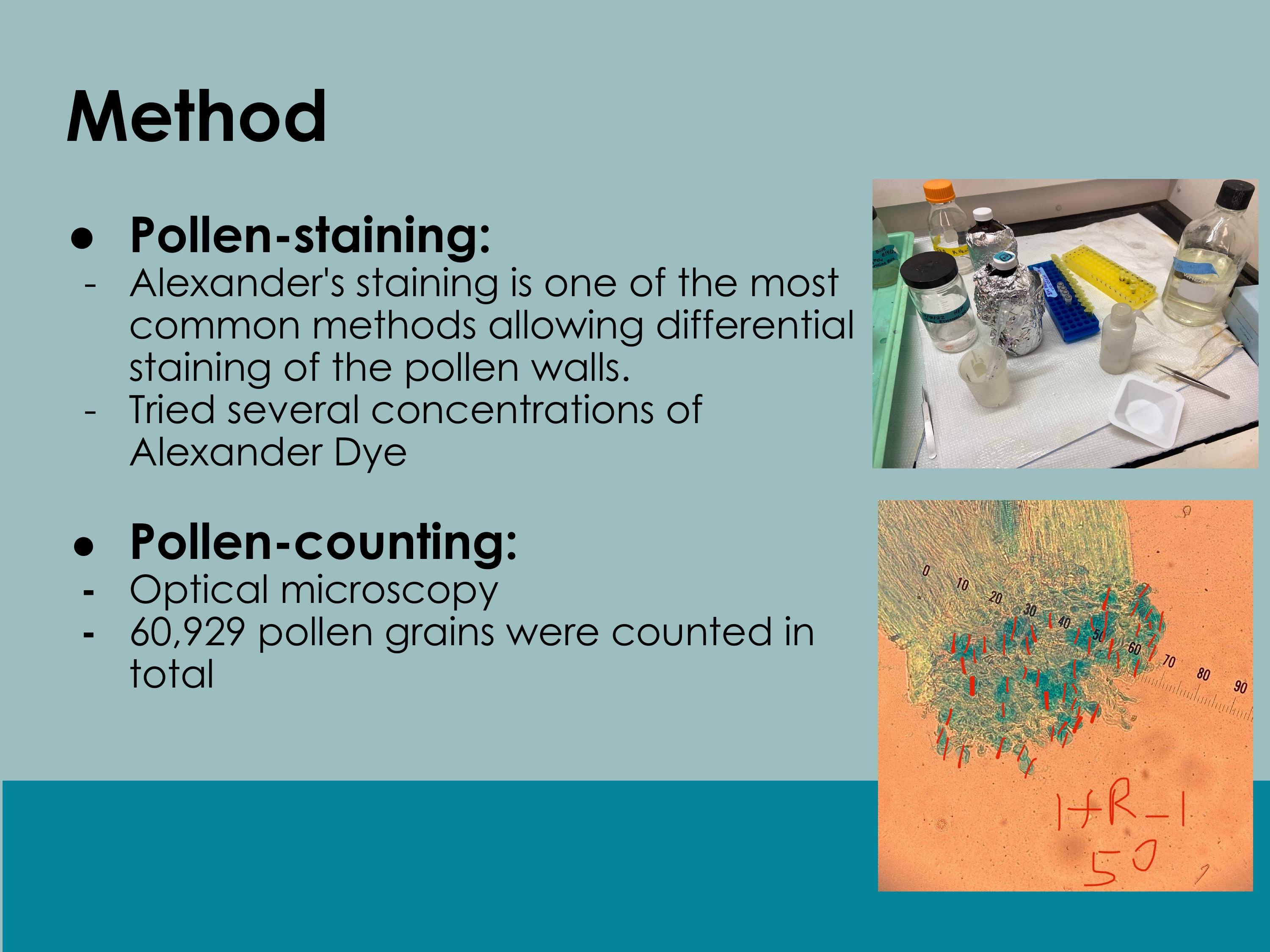
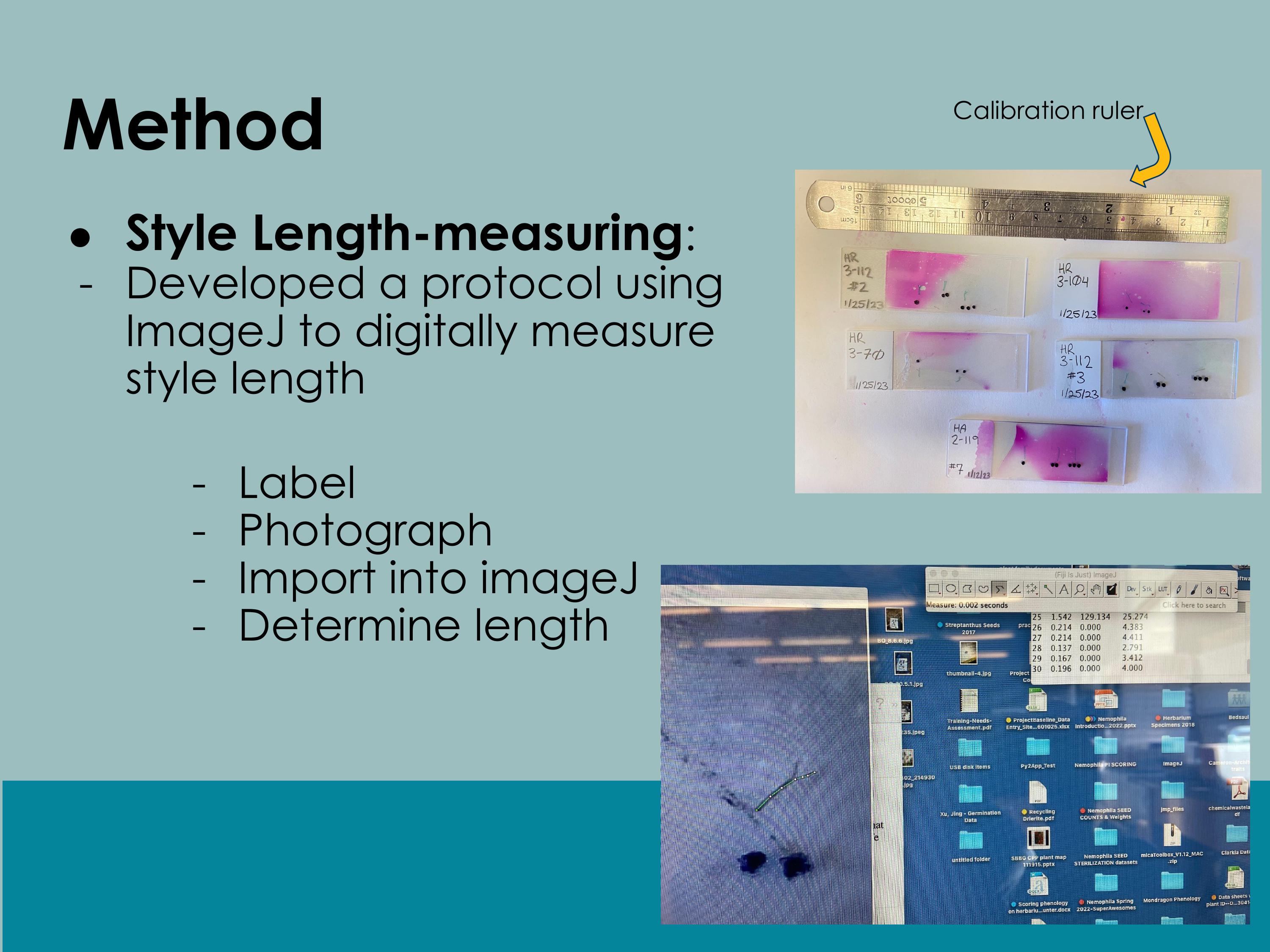
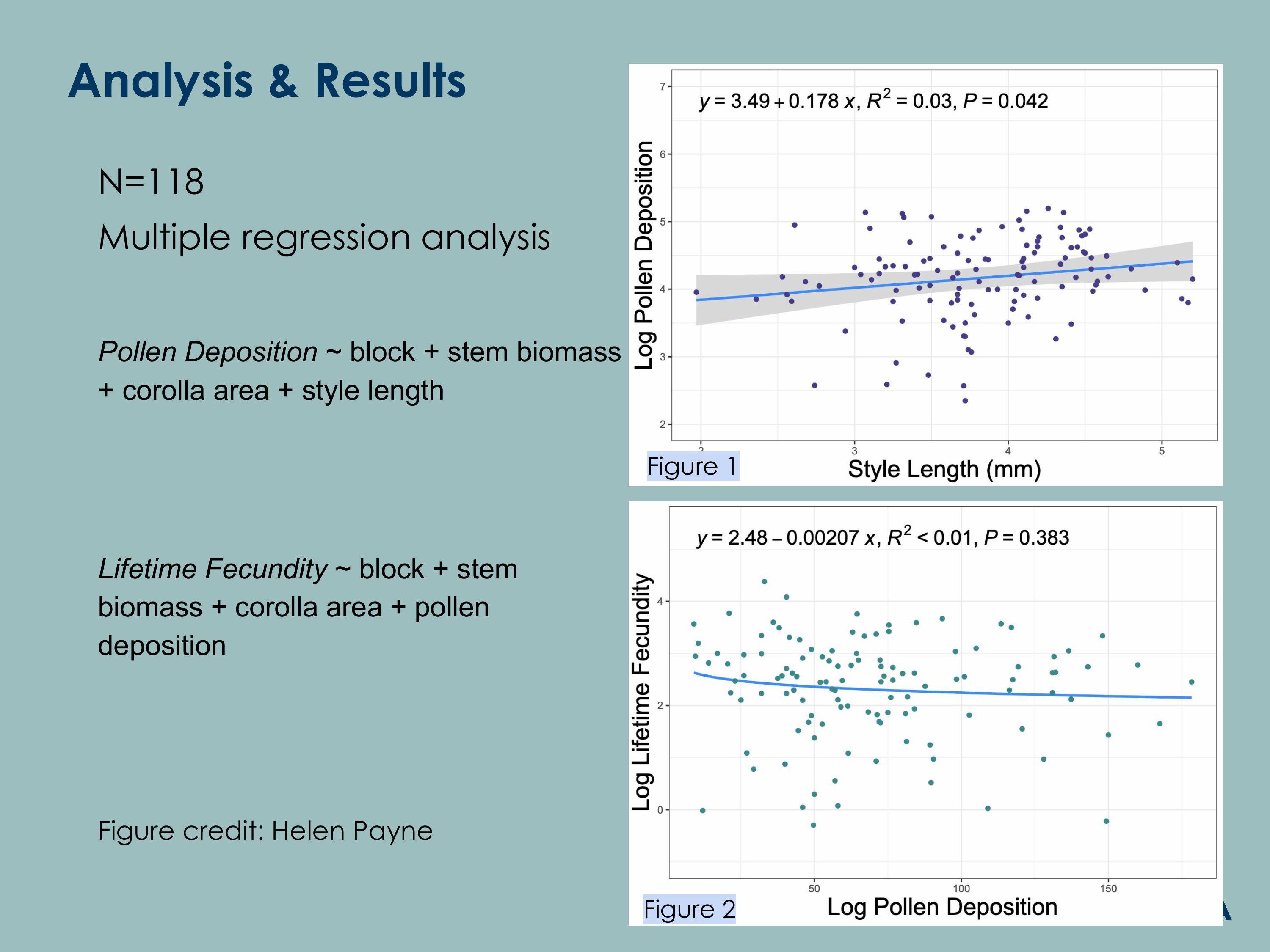
This research, presented at the UCSB EEMB Undergraduate Research Symposium (April 2023), investigates whether a morphological trait—style length—affects pollination success and reproductive fitness in Nemophila menziesii, a native California wildflower. Below is a visual walkthrough of the project from hypothesis to analysis:
Significance
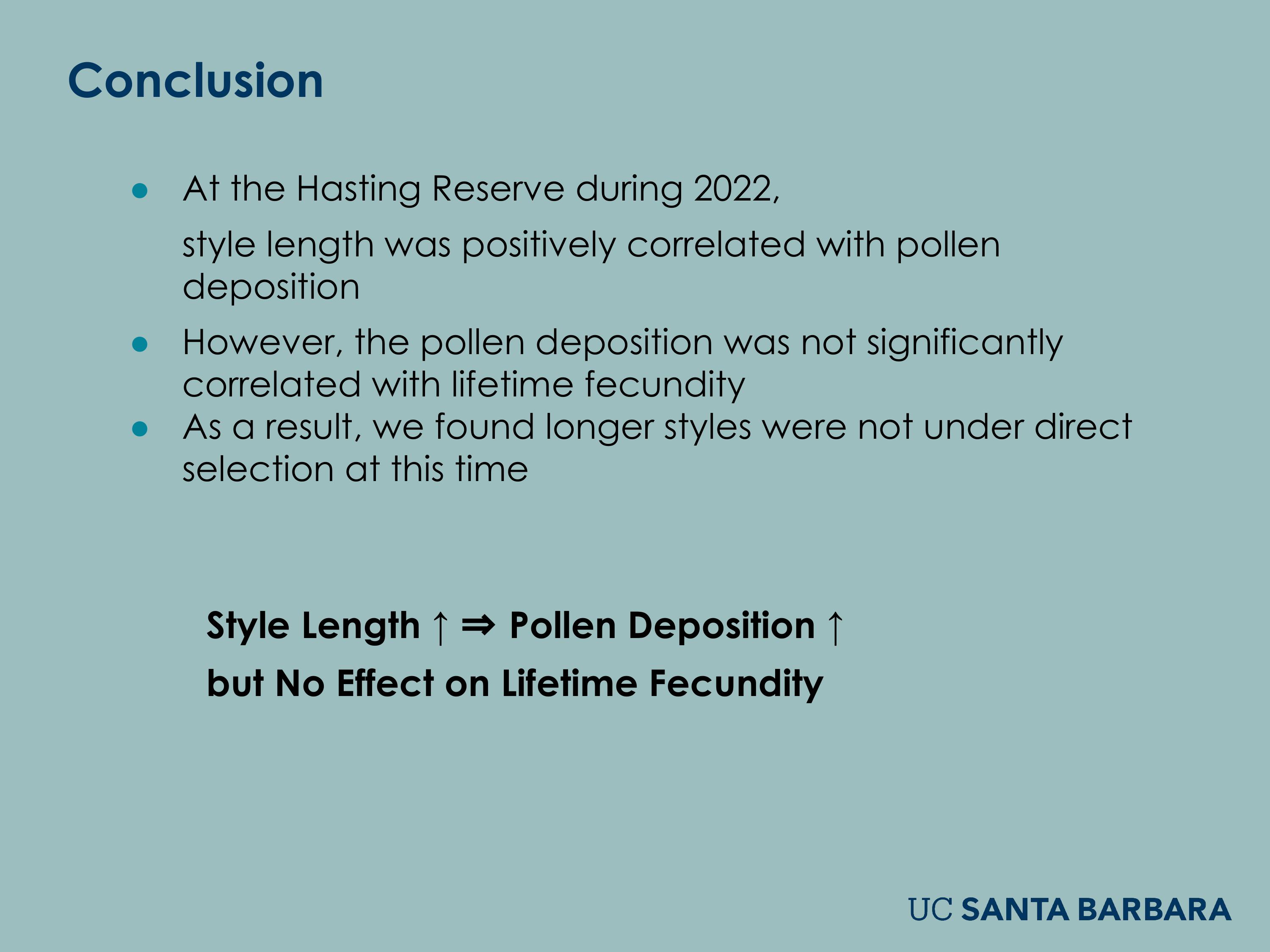
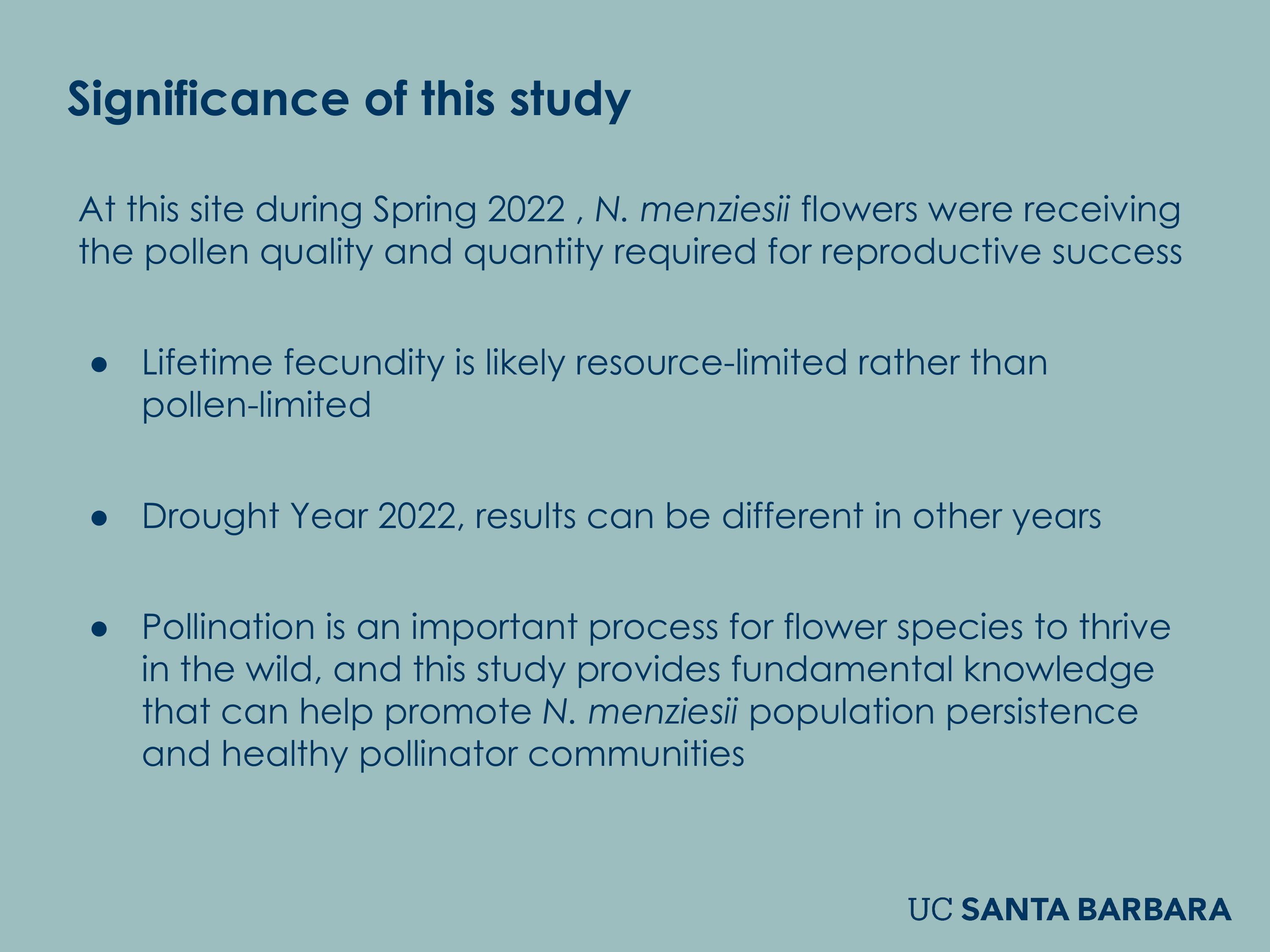
Understanding how plant traits influence reproductive success is central to the study of evolutionary ecology. This project sheds light on the role of floral morphology—specifically style length—in mediating pollination outcomes in wild plant populations. While longer styles were associated with higher pollen deposition, this trait did not translate to increased reproductive success under drought conditions.
These findings suggest that environmental stressors may decouple pollination efficiency from reproductive output, raising important questions about the evolution of floral traits under climate variability. The work contributes to broader efforts to understand plant-pollinator interactions, sexual selection in plants, and how ecological pressures shape reproductive strategies.